Watch technology · visual guide
How a Watch Works: The Simple Mechanism Behind Every Tick
A clear explanation of the parts, energy flow and basic mechanics that power mechanical and quartz watches.
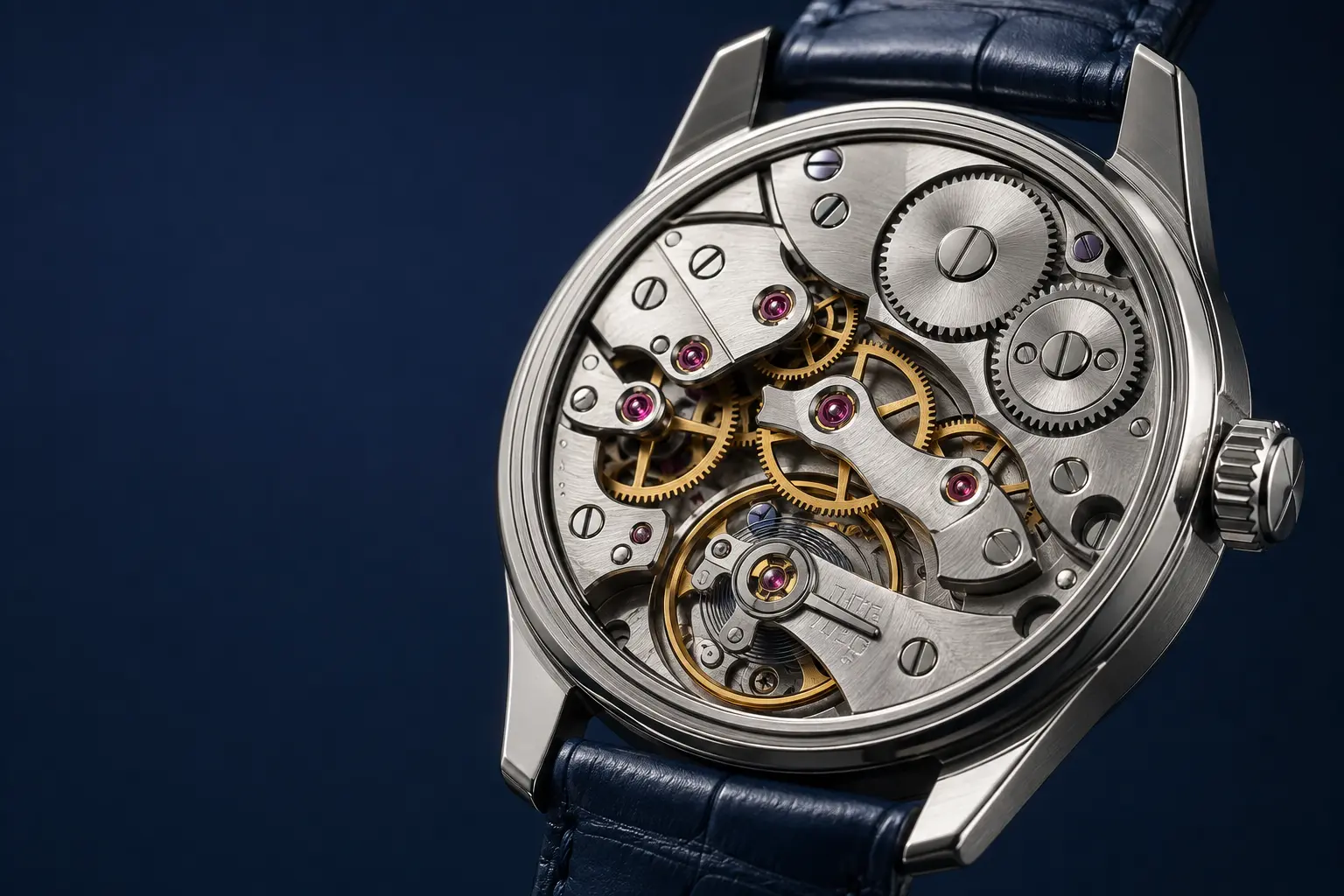
A watch receives or stores energy, releases it in a controlled rhythm, counts that rhythm and turns it into a readable display. Mechanical and quartz watches use different parts, but they perform the same four jobs.
The basic idea
Inside a mechanical watch, energy flows from the mainspring through the gear train to the escapement and balance wheel. Their repeating interaction controls the release of power. The hands then make that rhythm visible.
How it works: step by step
| Step | What happens | Purpose |
|---|---|---|
| 1 | The mainspring is wound. By hand or by an automatic rotor. |
Energy is stored. |
| 2 | Energy travels through the gear train. | Power is transmitted at useful speeds. |
| 3 | The escapement releases small impulses. | The spring cannot unwind all at once. |
| 4 | The balance wheel oscillates. | A repeating rhythm is established. |
| 5 | The gears drive the hands. | Hours, minutes and seconds become readable. |
The energy path
Select a movement, then play the sequence to follow energy from its source to the display.
Mechanical and quartz solve the same problem differently
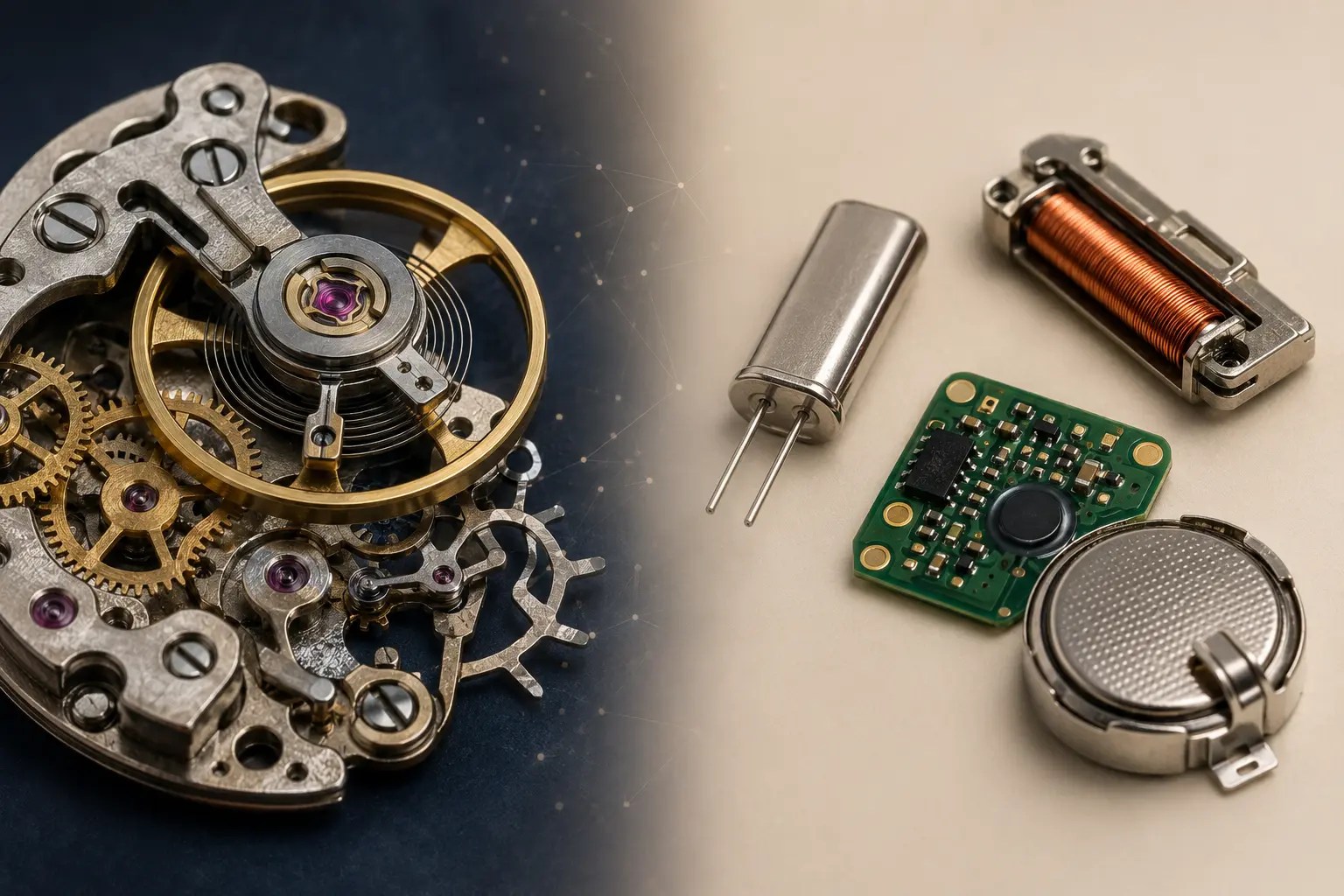
Mechanical
A wound spring supplies energy. The escapement and balance assembly regulate it through physical oscillation.
Quartz
A battery or rechargeable cell powers a quartz crystal and circuit. Regular electrical pulses operate a motor or digital display.
Types of watch movements
Wound by turning the crown. The energy is stored mechanically in the mainspring.
A rotor uses wrist motion to top up the same kind of mechanical mainspring.
Electrical energy and a quartz oscillator provide accurate timekeeping.
Light recharges an electrical storage cell that powers a quartz movement.
Why mechanical watches can gain or lose time
Position
Gravity affects the oscillator differently depending on how the watch rests or is worn.
Magnetism
A magnetised hairspring can disturb the rate significantly.
Temperature and lubrication
Materials and lubricants change as conditions and service age vary.
State of wind
Mainspring torque is not perfectly identical throughout the power reserve.
What complications add
Once a movement keeps basic time, additional mechanisms can display more information. Date, day, chronograph, GMT, moon phase, power reserve and calendar functions are called complications. The basic energy and timekeeping system remains underneath.
Energy source → transmission → regulator → display. Once you understand those four stages, almost every watch movement becomes easier to understand.
Explore watches for yourself
Movement technology is only one part of a watch. Compare it together with size, design, complications and wrist fit.
Continue with Watch Design Parameters Explained to understand the visible elements around the movement.
Primary references: Seiko mechanical-watch technical information and manufacturer movement documentation. Exact architecture varies by calibre.