Watch markets · practical buyer’s guide
Buying a Pre-Owned Watch: A Safe Second-Hand Guide
A used watch can offer better value, a discontinued reference or a character that a new watch cannot. The opportunity is real—but only when you judge the seller, the watch and the total cost separately.
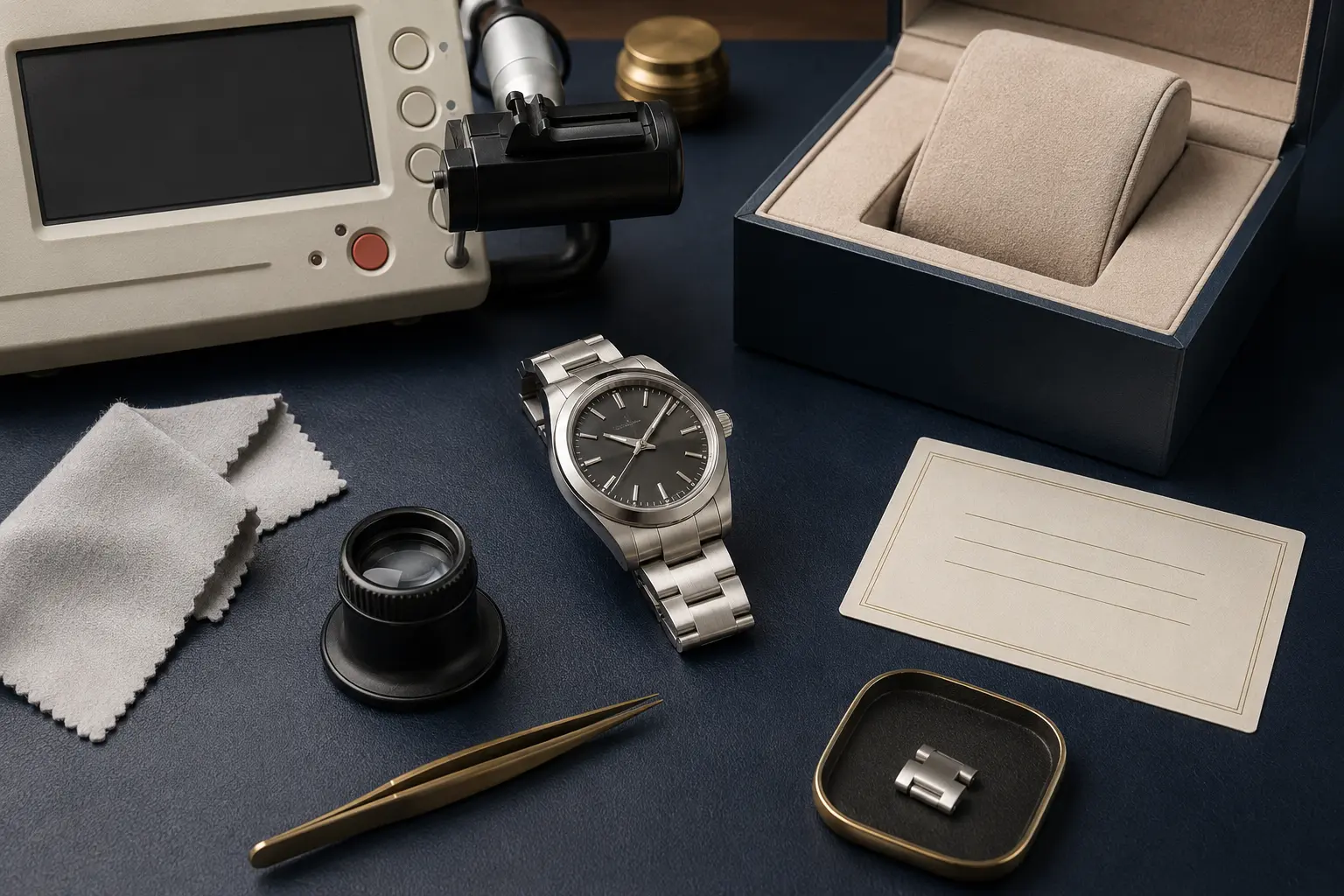
Buy the seller first. Then confirm the exact reference, originality, condition, service needs and transaction protection. A low purchase price is not a bargain if authentication, missing parts or an overdue service create a large second bill.
1. Decide what you are actually buying
“Pre-owned” covers almost-new current models, older daily watches, discontinued references and genuinely collectible vintage pieces. The correct standard changes with the goal.
Daily wearer
Prioritise reliable function, water resistance, comfortable bracelet fit and realistic service access.
Value purchase
Compare the total cost with a new or authorised pre-owned example—not only the asking price.
Collector piece
Original configuration, dial, hands, case geometry, provenance and period-correct parts become much more important.
Interactive inspection
2. The seven checks before you pay
Select each point to see what to verify and why it matters.
Check identity, trading history, independent reviews, return terms, insured shipping and a protected payment route. Do not let a convincing watch distract from an unverifiable seller.
- Real name and reachable address
- Clear return and dispute route
- Payment protection or reputable escrow
3. Authenticity is more than a serial number
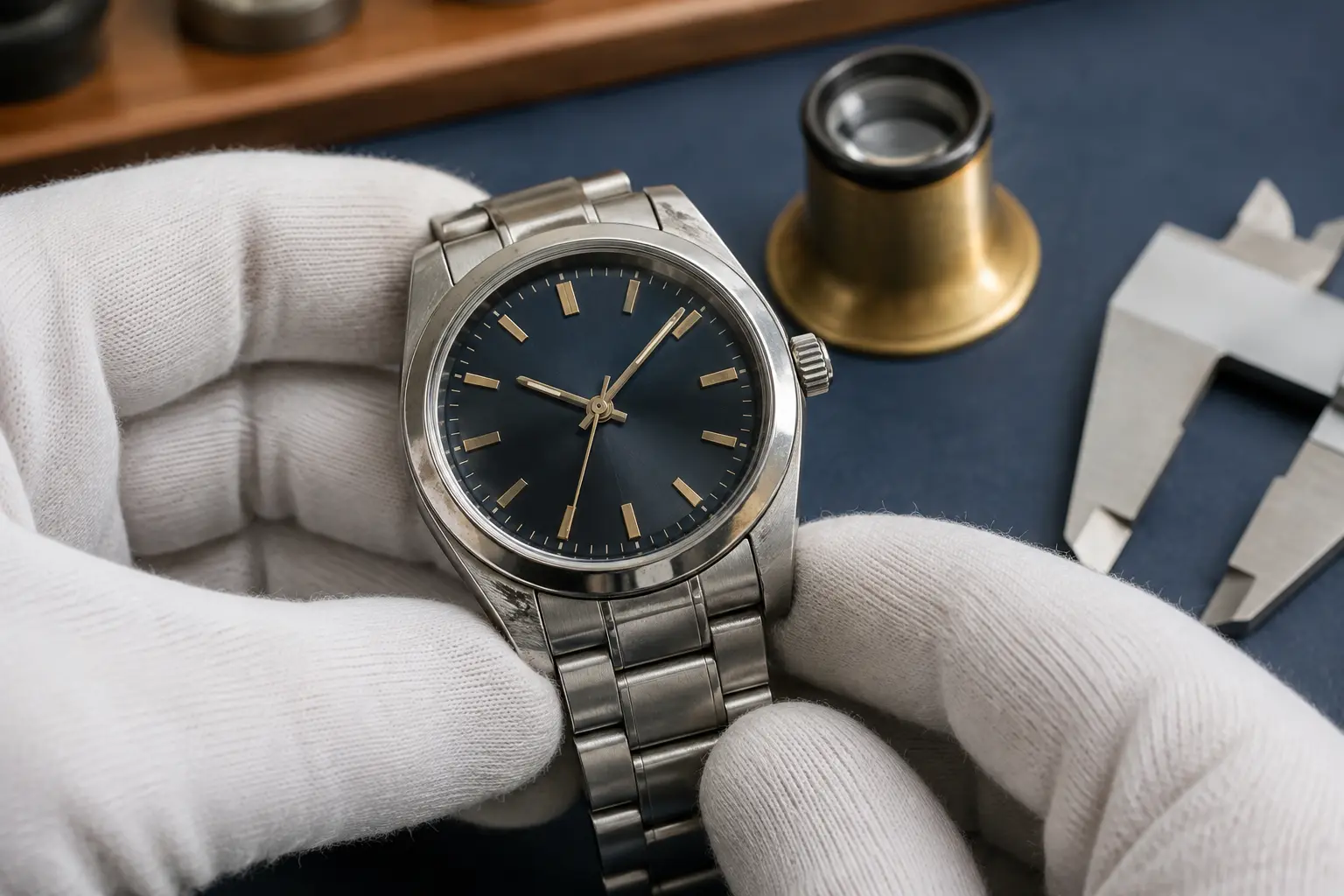
Begin with the exact brand, collection, reference and expected production period. Compare the case, dial layout, hands, crown, clasp, movement and engravings with reliable reference material. A number that looks plausible does not by itself prove that the complete watch is authentic or still in its original configuration.
Modern watch
Match the reference, serial placement, movement, dial and bracelet to the claimed configuration. Ask whether any parts were changed during service.
Vintage watch
Distinguish counterfeit parts from legitimate later service parts. A genuine replacement dial or bezel may improve usability but change collectability and price.
4. Read condition correctly
| Area | Look for | Why it matters |
|---|---|---|
| Case and lugs | Uneven edges, softened bevels, deep dents, aggressive polishing | Shape cannot be restored easily; originality can affect collector value. |
| Dial and hands | Moisture marks, uneven ageing, repainting, mismatched luminous material | Damage or replacement parts can materially change desirability. |
| Crystal and bezel | Chips, cracks, damaged coating, loose or incorrect insert | Replacement cost and water-resistance risk may rise. |
| Crown and pushers | Rough winding, damaged threads, weak reset, uncertain seals | These are functional warning signs, not just cosmetic wear. |
| Bracelet and clasp | Missing links, stretch, loose pins, damaged adjustment | Replacement bracelets and links can be surprisingly expensive. |
Never assume an older watch is water-resistant because the model was originally rated. Pressure testing verifies the present watch; the historic specification alone does not.
5. Movement, accuracy and service
Ask for a recent timing result, but do not treat one timegrapher screenshot as a complete health certificate. Test winding, setting, date change, chronograph functions and power reserve where applicable. Listen for rotor noise and feel for grinding or slipping.
Service invoice
More useful than “recently serviced.” Check the date, provider, work completed and parts replaced.
No history
Assume a service may be needed and include that amount in your offer.
Vintage service
Agree in advance which cosmetic or original parts must not be replaced without permission.
Mini calculator
Your realistic purchase budget
See how much money to plan for the watch and the costs that may follow the purchase.
This calculator helps you plan a budget; it does not estimate the market value of the watch.
6. Set a fair price
Compare multiple examples of the same reference and configuration. Give more weight to recent completed transactions where available than to optimistic listings that remain unsold. Adjust for condition, service evidence, originality, bracelet size, box and papers, seller protection and local taxes or import costs.
7. Complete the deal safely
- Save the complete listing, description, photographs and seller messages.
- Confirm the reference, included items, defects and agreed condition in writing.
- Use insured, trackable shipping and record the sealed package when it arrives.
- Inspect the watch within the platform or seller’s return window.
- For an in-person deal, meet at a reputable watchmaker or jeweller rather than carrying cash to an unknown private location.
- Do not move payment outside a protected platform merely for a discount.
Certified pre-owned: safer, but compare the premium
Manufacturer or retailer certified programmes can add authentication, service and a warranty. The benefit is lower uncertainty; the trade-off is often a higher price and a smaller selection. Check exactly who issued the certificate, what was inspected, which parts were replaced and what the warranty covers.
Frequently asked questions
Are box and papers proof that a watch is genuine?
No. They support provenance and completeness, but documents and packaging can be incorrect, replaced or counterfeit. Authenticate the watch itself.
Is a polished watch bad?
Not automatically. Light professional refinishing may suit a daily wearer. Heavy polishing that changes case geometry can reduce collector appeal and should influence the price.
Should I buy privately or from a dealer?
A private sale may cost less, while a reputable dealer may provide clearer returns, warranty and accountability. Compare the total protection—not only the headline price.
Does a recent service make the watch original?
No. Service addresses function. Ask which visible and movement parts were replaced and whether the original parts are included.
Compare before you buy
Use the WhichWatchFits tools to compare size, movement, features, price and wrist fit before committing to a listing.
Sources and further reading: Rolex Certified Pre-Owned programme; Chrono24 Buyer Protection and escrow information. Programme terms, return rights, taxes and consumer protections vary by seller and country; verify the current terms before purchase.
Continue exploring
Use the tools and continue with related guides.